> For the complete documentation index, see [llms.txt](https://docs.nexthink.com/platform/llms.txt). Markdown versions of documentation pages are available by appending `.md` to page URLs; this page is available as [Markdown](https://docs.nexthink.com/platform/library-packs/l1-support/workflow_-system-crash-troubleshooting/usage-guide_-system-crash-troubleshooting.md).
# Usage guide: System crash troubleshooting
## Introduction
This workflow will help you orchestrate the notification, troubleshooting, and incident management of system crashes across your landscape.
Please keep in mind this is a guide and represents just some of the potential insight and actions you can take. This workflow can be used out-of-the-box or used as a template to build and handle other use cases tailored to your environment.
Ensure your library pack is properly configured by following the steps highlighted in its configuration guide:
[Configuration guide: System crash troubleshooting](/platform/library-packs/l1-support/workflow_-system-crash-troubleshooting/configuration-guide_-system-crash-troubleshooting.md)
## Workflow structure
This workflow is primarily designed to run automatically using an event trigger.
This section describes the key steps in this workflow:
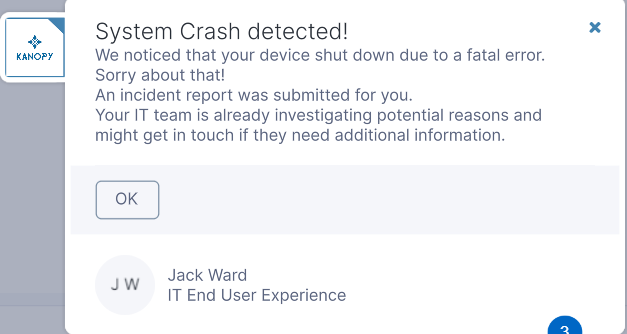
* The workflow detects a system crash event and is initiated in real-time, and a notification is sent to the employee informing them that a system crash was detected and is being investigated.
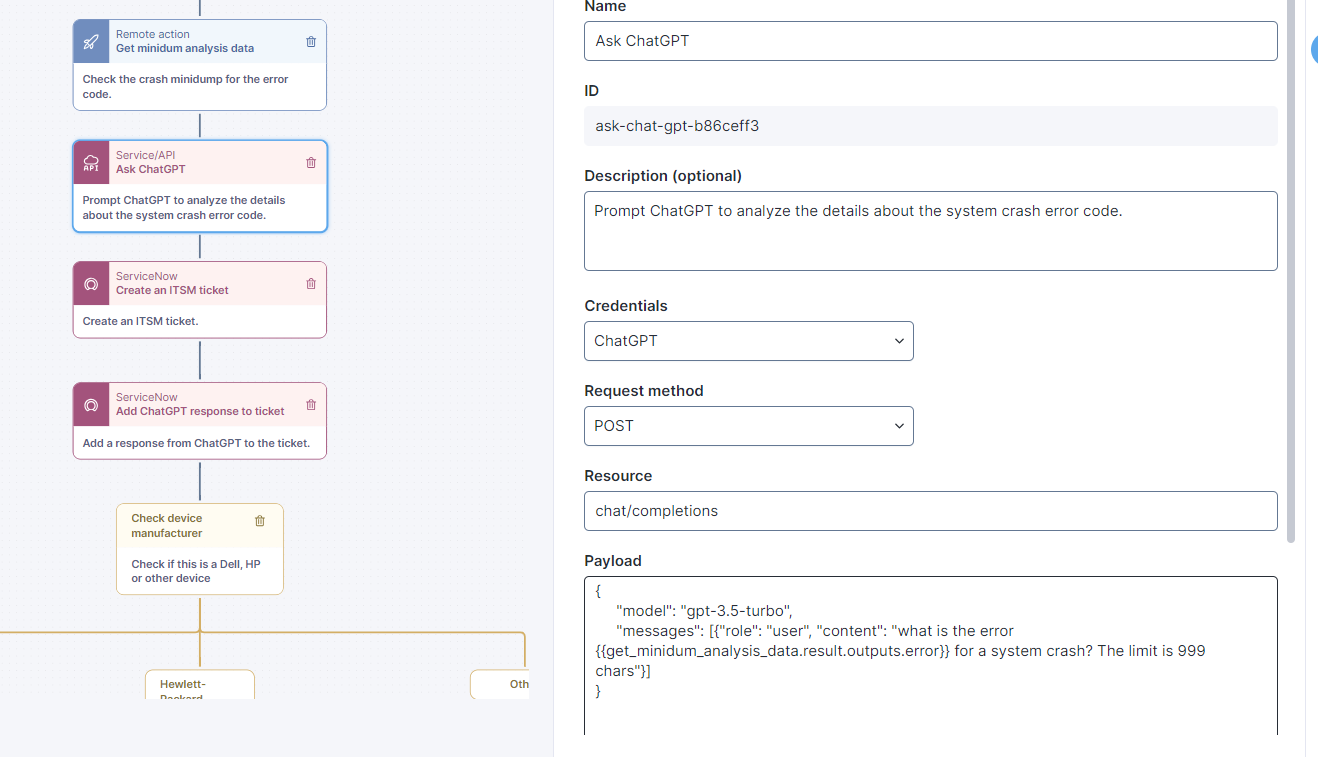
* The Get BSOD crash minidump analysis remote action is triggered to retrieve the system crash details from the affected device. This information is parsed by Chatgpt to understand what the error code refers to, which is then added to an automatically created ticket. This information can save IT support crucial time by providing context directly in the ticket, avoiding having to manually research the error code’s significance.
Chatgpt connector in the workflow
Example result automatically added to the ticket’s work note
* The workflow then performs a disk cleanup because low disk space is considered a common cause of system crashes and the driver update procedure will require additional disk space. This cleanup is performed by the Disk cleanup remote action and the results are populated in the ITSM ticket created in the previous steps.
* The workflow then performs a key driver compliance check, as it is a very common root cause for system crashes. This is done by verifying the manufacturer to retrieve pending driver information and, if required, performing a driver update. This check is performed on Dell and HP devices.
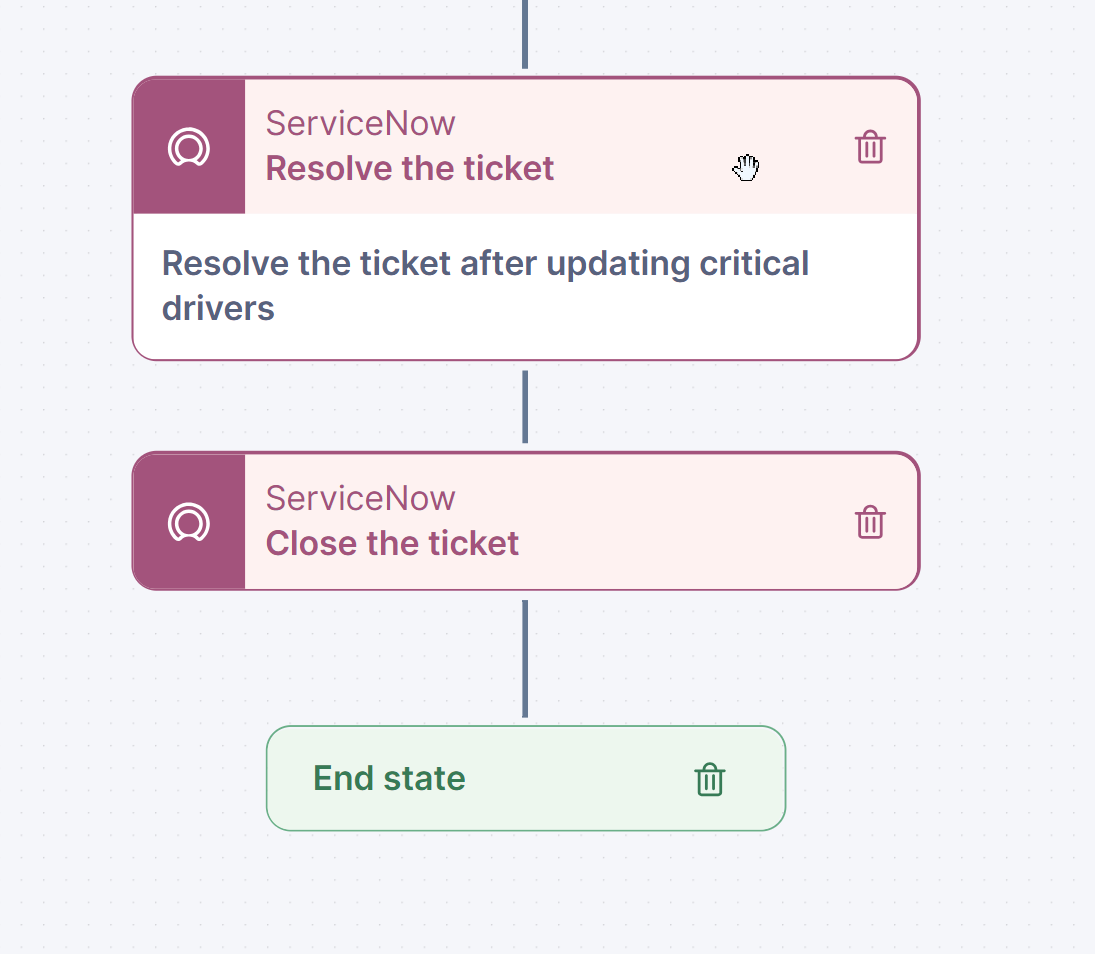
* All information about any performed action is added to the final ticket, which is automatically resolved and closed.
Resolve and close tickets automatically
***
RELATED TOPICS
* [Manage Workflows](https://docs.nexthink.com/platform/user-guide/workflows/managing-workflows)
* [Manage Campaigns](https://docs.nexthink.com/platform/user-guide/campaigns/managing-campaigns)
* [Manage Remote Actions](https://docs.nexthink.com/platform/user-guide/remote-actions/getting-started-with-remote-actions)
---
# Agent Instructions
This documentation is published with GitBook. GitBook is the documentation platform designed so that both humans and AI agents can read, navigate, and reason over technical content effectively. Learn more at gitbook.com.
## Querying This Documentation
If you need additional information that is not directly available in this page, you can query the documentation dynamically by asking a question.
Perform an HTTP GET request on the current page URL with the `ask` query parameter, and the optional `goal` query parameter:
```
GET https://docs.nexthink.com/platform/library-packs/l1-support/workflow_-system-crash-troubleshooting/usage-guide_-system-crash-troubleshooting.md?ask=&goal=
```
`ask` is the immediate question: it should be specific, self-contained, and written in natural language.
`goal` is optional and describes the broader end goal you are ultimately trying to accomplish on behalf of the user. GitBook uses it to tailor the answer towards what is most useful for that goal.
The response will contain a direct answer to the question and relevant excerpts and sources from the documentation.
Use this mechanism when the answer is not explicitly present in the current page, you need clarification or additional context, or you want to retrieve related documentation sections.

.png?alt=media)
.png?alt=media)