> For the complete documentation index, see [llms.txt](https://docs.nexthink.com/llms.txt). Markdown versions of documentation pages are available by appending `.md` to page URLs; this page is available as [Markdown](https://docs.nexthink.com/platform/ja/getting-started/logging-in-to-the-web-interface.md).
# ウェブインターフェースにログインする
このページでは、Nexthink webインターフェースにアクセスする方法についてのステップバイステップガイドを提供します。
* 管理者がユーザー向けに Security Assertion Markup Language(SAML)認証または Windows を有効にしている場合の、企業の[シングルサインオン](/platform/ja/user-guide/administration/account-management/single-sign-on.md)(SSO)。
* 外部認証メカニズムが利用できない場合は、Nexthinkアカウントを使用します。
## 必要条件
webインターフェースにアクセスするには、Nexthinkアカウントが必要です。
## 企業SSOでログイン
1. webブラウザを開きます。
2. アドレスバーにNexthinkインスタンスのFully Qualified Domain Name (FQDN) を次のように入力します。
* `..nexthink.cloud`
* `.data..nexthink.cloud`\
FQDN説明:
* `` - Nexthinkインスタンスの名前
* `` - インスタンスのローカライゼーションの名前:
* `us` - アメリカ合衆国
* `eu` - 欧州連合
* `pac` - アジア太平洋地域
* `meta` - 中東、トルコ、アフリカ
* **例:**\
`https://kanopy.eu.nexthink.cloud`
3. webインターフェースは、あなたの会社のSSOログインページにリダイレクトします。
## ローカルNexthinkアカウントでログイン
{% hint style="info" %}
NexthinkはローカルNexthinkアカウントのために、徐々にmulti-factor authentication (MFA)を展開しています。 MFAはまだあなたのテナントでは利用可能ではないかもしれません。
{% endhint %}
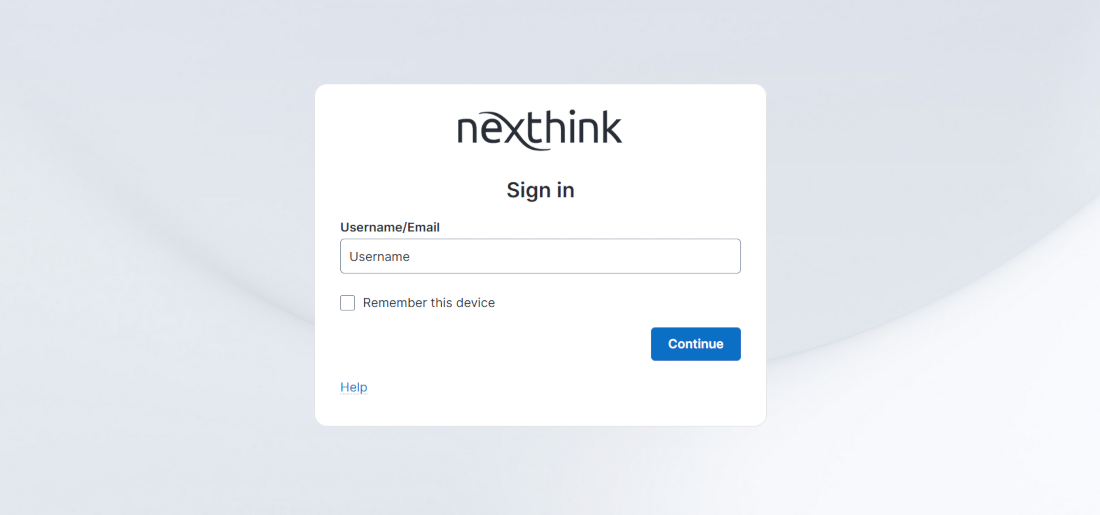
1. FQDNに`/login`を追加した標準ローカルログインページにアクセスします。次のようになります。
* `..nexthink.cloud/`\
FQDN説明:
* `` - Nexthinkインスタンスの名前
* `` - インスタンスのローカライゼーションの名前:
* `us` - アメリカ合衆国
* `eu` - 欧州連合
* `pac` - アジア太平洋地域
* `meta` - 中東、トルコ、アフリカ
* **例:**\
`https://kanopy.eu.nexthink.cloud/login`
2. 該当するフィールドに次の情報を入力します:
* ユーザー名
* パスワード
* MFAコード
3. オプションで**このデバイスを記憶する**を選択すると、次回から自動的にログインできます。
4. **サインイン**を選びます。
### multi-factor authentication の概要
multi-factor authentication (MFA) はユーザーに複数の識別形式を要求することで、Nexthinkテナントへの追加のセキュリティレイヤーを提供します。
MFAには次の要素が含まれます:
* ユーザーが知っている情報、例えばパスワード。
* Google Authenticator、Microsoft Authenticator、Authy、Duo、1Password、またはBitwardenなどのアプリケーションによって生成される時間制限付きワンタイムパスワード (TOTP)。
ログインプロセス中にユーザーは両方のコンポーネントを使用する必要があります。
不正アクセス、データ流出、ID盗難からの保護を大幅に強化するために、MFAを有効にしてください。 MFAを使用することで、資格情報の盗難、フィッシング攻撃、ブルートフォース攻撃のリスクを低減し、ユーザーアカウントとプラットフォーム上の機密情報を保護します。全体的に、MFAはNexthinkテナントの完全性を強化し、より安全なユーザーエクスペリエンスを確保するための重要なセキュリティ機能です。
複数の従業員が管理者(バックアップ)アカウントにアクセスする必要がある場合、Nexthink はそれぞれの管理者に対して個別のローカルバックアップ管理者アカウントを作成するか、1Password や Bitwarden などの MFA シークレットを安全に共有できる資格情報管理ソリューションによって保護された単一の共有アカウントを保持することを推奨します。
{% hint style="info" %}
「このデバイスを記憶する」を選択すると、システムはデバイスクッキーを作成します。デバイスクッキーが有効であり続ける限り、ユーザーは追加のリスク要因が適用されない限り、再度 MFA を求められることはありません。
{% endhint %}
### ローカルアカウントに対してMFAを使用
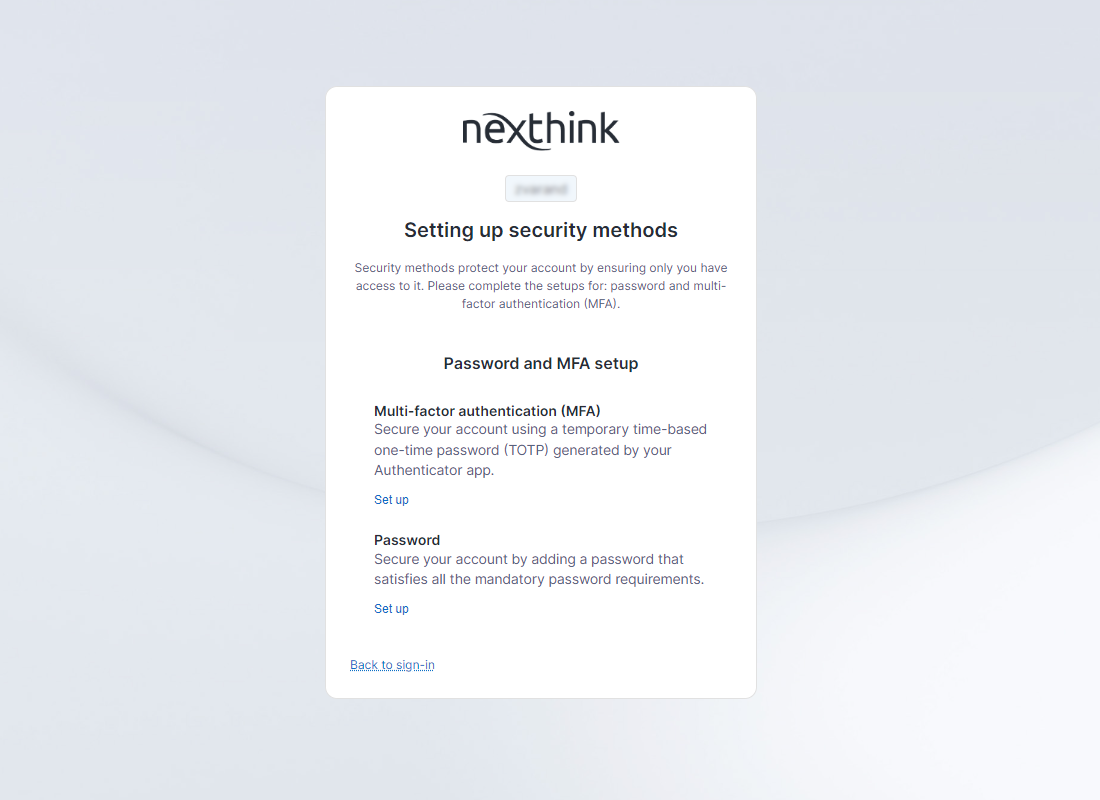
テナント内のローカルアカウントでMFAが有効になっている場合、次のいずれかの手続きも実行する必要があるかもしれません。
#### 現在アクティブなアカウントにMFAが設定されていません
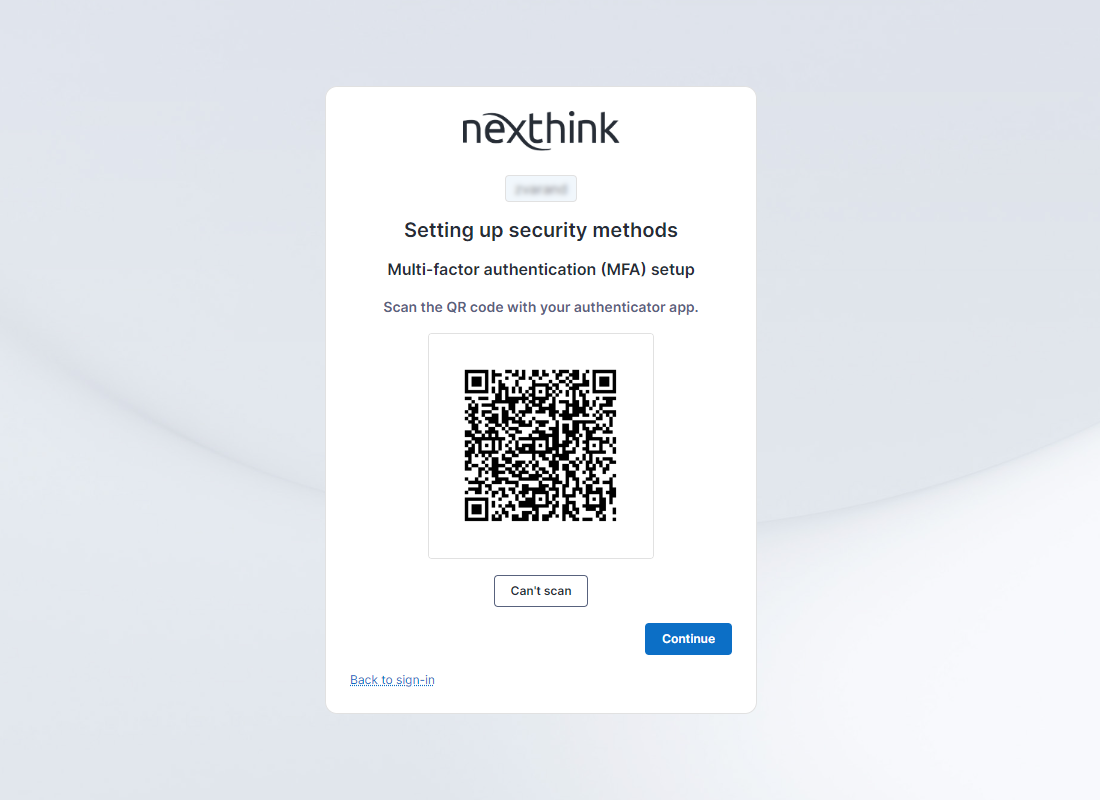
1. Google Authenticator、Microsoft Authenticator、1PasswordなどのTOTPをサポートするコンピューターやモバイルデバイスに認証アプリケーションをインストールしてください。
2. **多要素認証 (MFA)** を選択します。
3. 認証アプリケーションでQRコードをスキャンしてください。
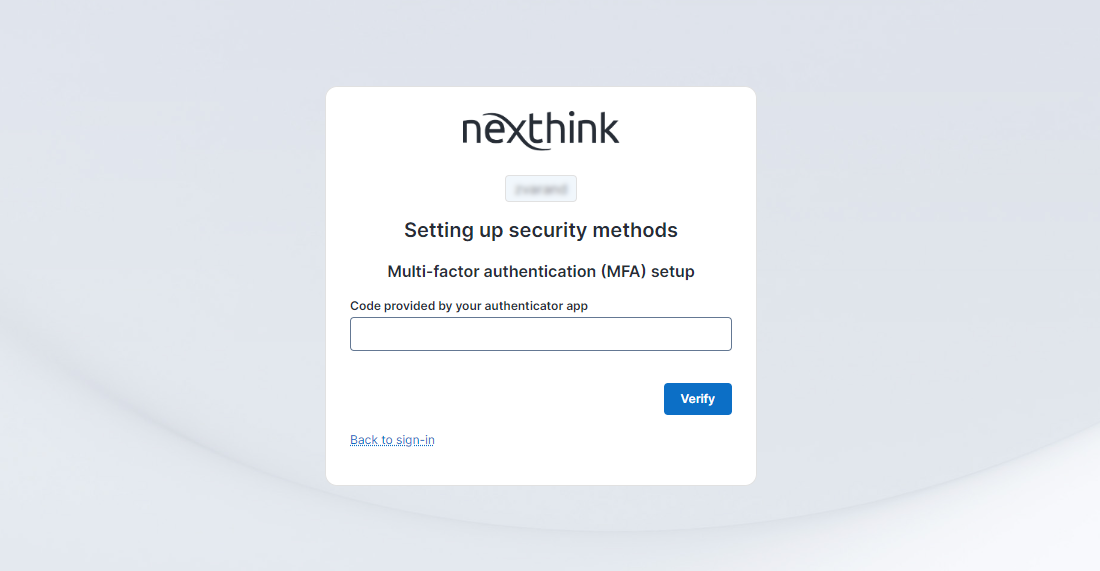
4. 認証アプリケーションから提供されたコードを入力してください。
5. **続行**を選択します。
6. コードが検証され、設定が完了したら**完了**を選択します。
#### 現在アクティブなアカウントにMFAが既に設定されています
1. 認証アプリケーションから提供されたコードを入力してください。
2. **サインイン**を選択します。
### MFAを設定
#### 認証アプリケーションがまだ利用可能です
古い認証アプリケーションにアクセスできる場合のMFAを再設定するための手順を実行してください。例えば、既存のモバイルデバイスから新しいデバイスへMFAを移行するための場合。
1. 次のようにFQDNを使用して、標準のローカルログインページにアクセスします:\ `..nexthink.cloud`
2. ユーザー名を入力し、**続行**を選択します。
3. パスワードを入力し、「**続行**」を選択してください。
4. 「**サインイン**」を選択してください。
5. 元の認証アプリケーションから提供されたコードを入力してください。
6. 「**確認**」を選択してください。
7. 「**マイアカウント**」ページに移動してください。
8. 「**多要素認証 (MFA) をリセット**」を選択してください。
9. 「**はい**」を選択してください。
10. 「**マイアカウント**」メニューから「**サインアウト**」を選択してください。
11. ユーザー名を入力し、「**続行**」を選択してください。
12. パスワードを入力し、「**続行**」を選択してください。
13. 認証アプリケーションでQRコードをスキャンしてください。
14. 認証アプリケーションから提供されたコードを入力し、「**続行**」を選択してください。
#### 認証アプリケーションが利用できない場合
モバイルデバイスにアクセスできない場合、例えばデバイスを紛失した場合、多要素認証を再設定する必要がある場合は、Nexthink 管理者に連絡して MFA のリセットを依頼してください。
## ロックされたアカウントへのアクセスを回復する
ログインに5回連続で失敗すると、Nexthink によりアカウントがロックされます。ロックアウトにより、ブルートフォース攻撃からアカウントが保護されます。
待機期間が経過しても、アカウントのロックは自動的に解除されません。アクセスを回復するには、Nexthink 管理者に連絡し、アカウントのロック解除を依頼してください。
---
# Agent Instructions
This documentation is published with GitBook. GitBook is the documentation platform designed so that both humans and AI agents can read, navigate, and reason over technical content effectively. Learn more at gitbook.com.
## Querying This Documentation
If you need additional information that is not directly available in this page, you can query the documentation by asking a question.
Perform an HTTP GET request on the following URL with the `ask` and `goal` query parameters:
```
GET https://docs.nexthink.com/platform/ja/getting-started/logging-in-to-the-web-interface.md?ask=&goal=
```
`ask` is the immediate question: it should be specific, self-contained, and written in natural language.
`goal` is what the user is ultimately trying to achieve, the reason they need the answer. Sharing it helps GitBook give you a better, more relevant answer. A goal is most helpful when it describes the outcome the user wants rather than restating the question. For example, with `ask=how do I create an API token`, a goal like `automate deployments from our CI pipeline` lets GitBook tailor the answer to that use case.
The response will contain a direct answer to the question and relevant excerpts and sources from the documentation.
Use this mechanism when the answer is not explicitly present in the current page, you need clarification or additional context, or you want to retrieve related documentation sections.