> For the complete documentation index, see [llms.txt](https://docs.nexthink.com/llms.txt). Markdown versions of documentation pages are available by appending `.md` to page URLs; this page is available as [Markdown](https://docs.nexthink.com/configuring_nexthink/bringing-data-into-your-nexthink-instance/deploying-nexthink-in-non-vdi-environment/configure-amplify/installation-and-configuration.md).
# Installing and configuring Amplify locally
Before configuring Amplify centrally in Nexthink, the Amplify admins must first configure the plugin locally on their devices.
## Installing the Amplify browser extension
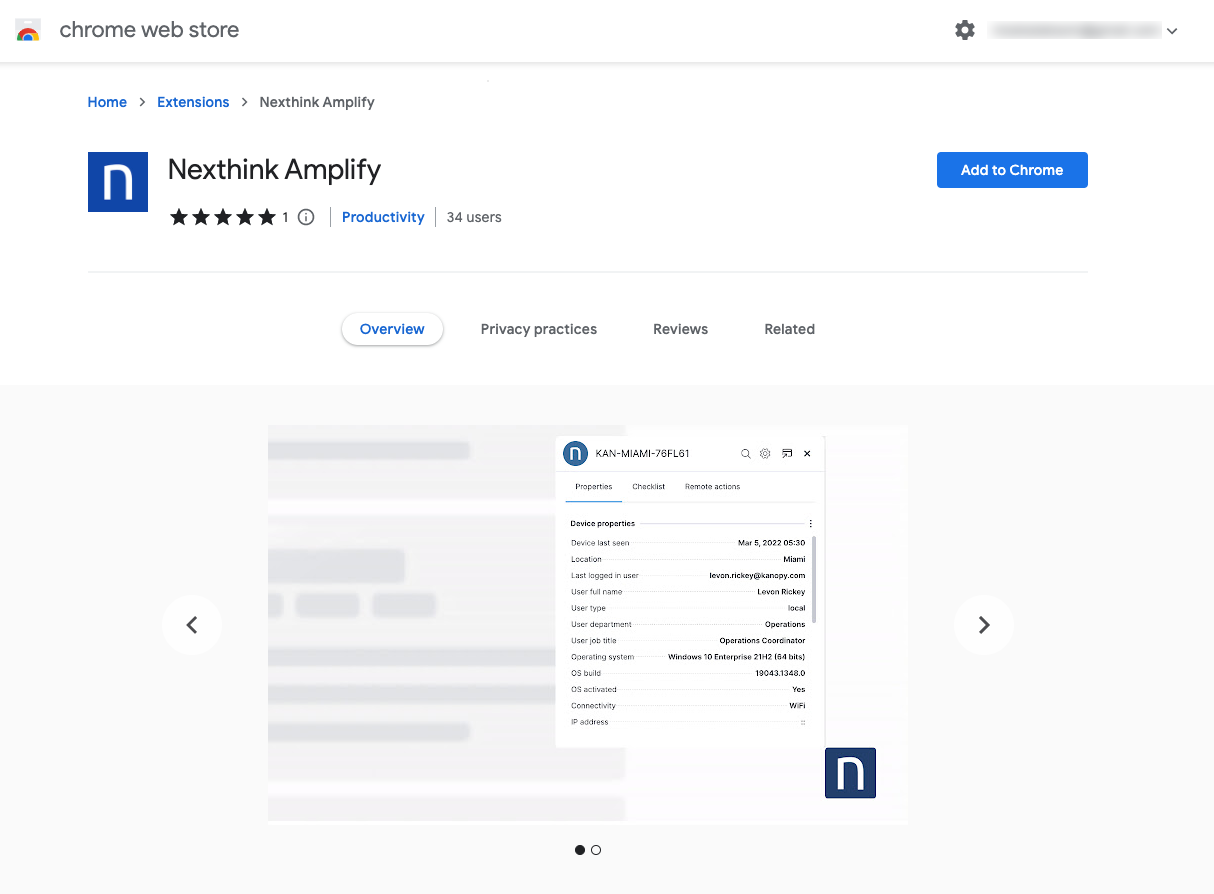
1. Install the extension on your device manually to configure and test Amplify.
* Install the Amplify extension:
* From the [Chrome Web Store](https://chromewebstore.google.com/detail/nexthink-amplify/bmpbcphgifhfkfjioddeenggdpffbgek) on Google Chrome.
* From the [Edge Store](https://microsoftedge.microsoft.com/addons/detail/nexthink-amplify/kcidkikoejfejnfmbmhmfkncdlopflhe) on Microsoft Edge.
2. Push the extension to a target group of Amplify users via a group policy or any other configuration management solution.
3. After installing the Amplify extension, verify that the browser has added the extension by using the extension manager page:
* For Google Chrome: `chrome://extensions/`
* For Microsoft Edge: `edge://extensions/`
{% hint style="danger" %}
The Amplify extension from the Edge store only functions if SSO is enabled and configured.
{% endhint %}
{% hint style="info" %}
The Amplify extension updates when a new version is released in the Chrome Web Store.
{% endhint %}
***
## Configuring the Nexthink Instance URL
Set up Amplify based on your specific needs:
* Integrate a [single Nexthink instance](#installationandconfiguration-configuringamplifyforasingleinstancesingleinstance) with one or multiple web applications.
* Integrate [multiple Nexthink instances](#installationandconfiguration-configuringamplifyformultipleinstancesmulti-instance) with one or multiple web applications.
{% hint style="info" %}
To configure Amplify, ensure you have **Manage Amplify** permissions.
{% endhint %}
### Configuring Amplify for a single instance
#### **Connecting to the Nexthink instance from the Amplify extension**
1. Open the browser where you installed the Amplify extension (Google Chrome or Microsoft Edge).
2. Right-click on the Amplify extension in the browser extension bar.
3. From the drop-down, click **Options** to open the **Nexthink Amplify configuration** page.
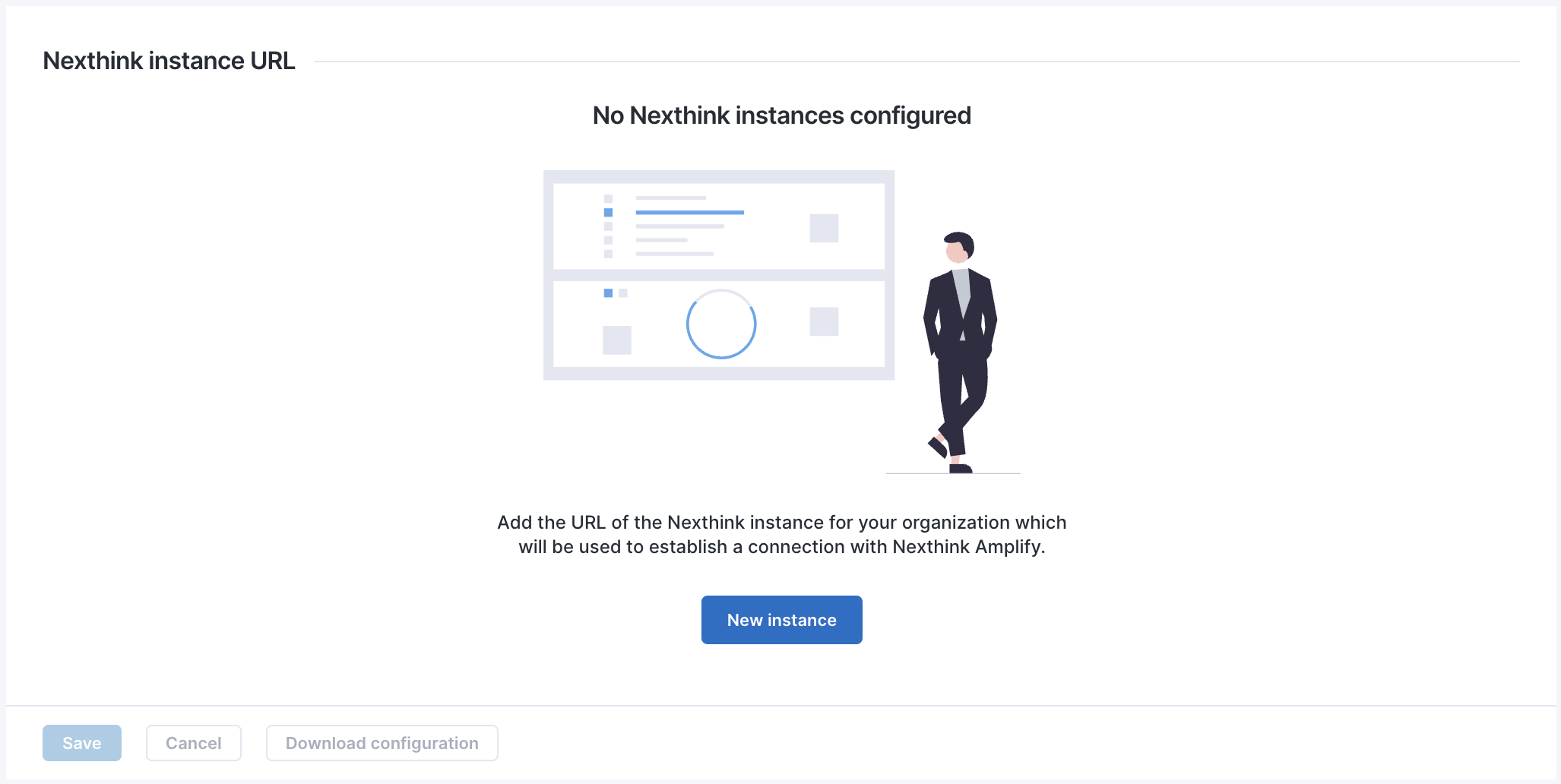
4. From the **Nexthink Amplify configuration** page, click on **New instance**.
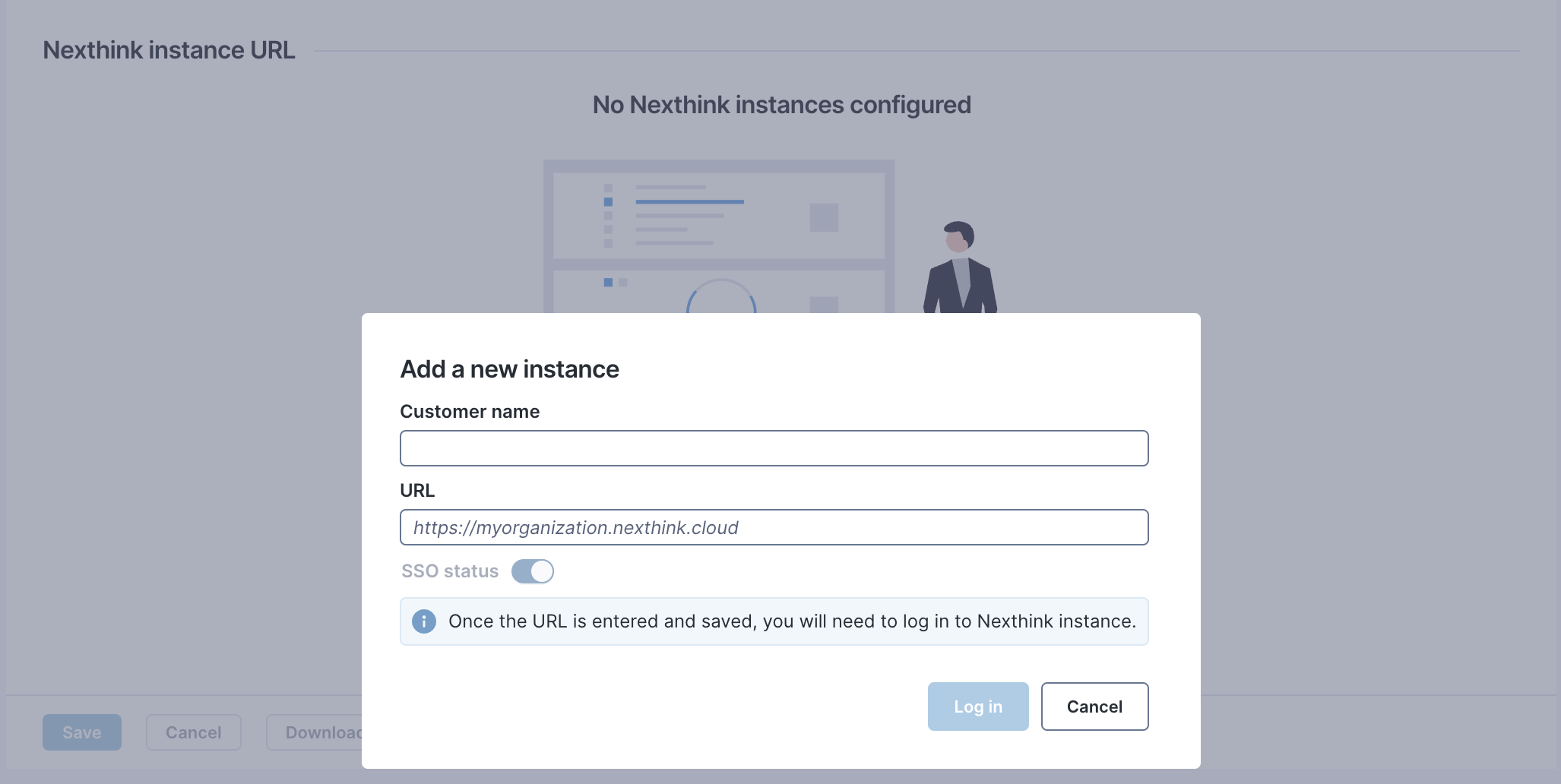
5. Enter the Customer name and the URL of the organization's Nexthink instance using the following `https://INSTANCE_NAME.cloud` format.
* The Nexthink URL must end with `.nexthink.cloud` with no forward slash after `.cloud`.
* URL example:`https://myorganization.nexthink.cloud`.
6. **Log in** following a successful authentication.
7. **Save** the new instance configuration in the Amplify extension.
### Configuring Amplify for multiple instances
The Amplify browser extension supports integrating multiple Nexthink instances. This is particularly helpful for support teams sharing an ITSM solution with customers with independent instances.
To locally add multiple Nexthink instances to Amplify:
1. Open the browser where you installed the Amplify extension (Google Chrome or Microsoft Edge).
2. Right-click on the Amplify extension in the browser extension bar.
3. From the drop-down, click **Options** to open the **Nexthink Amplify configuration** page.
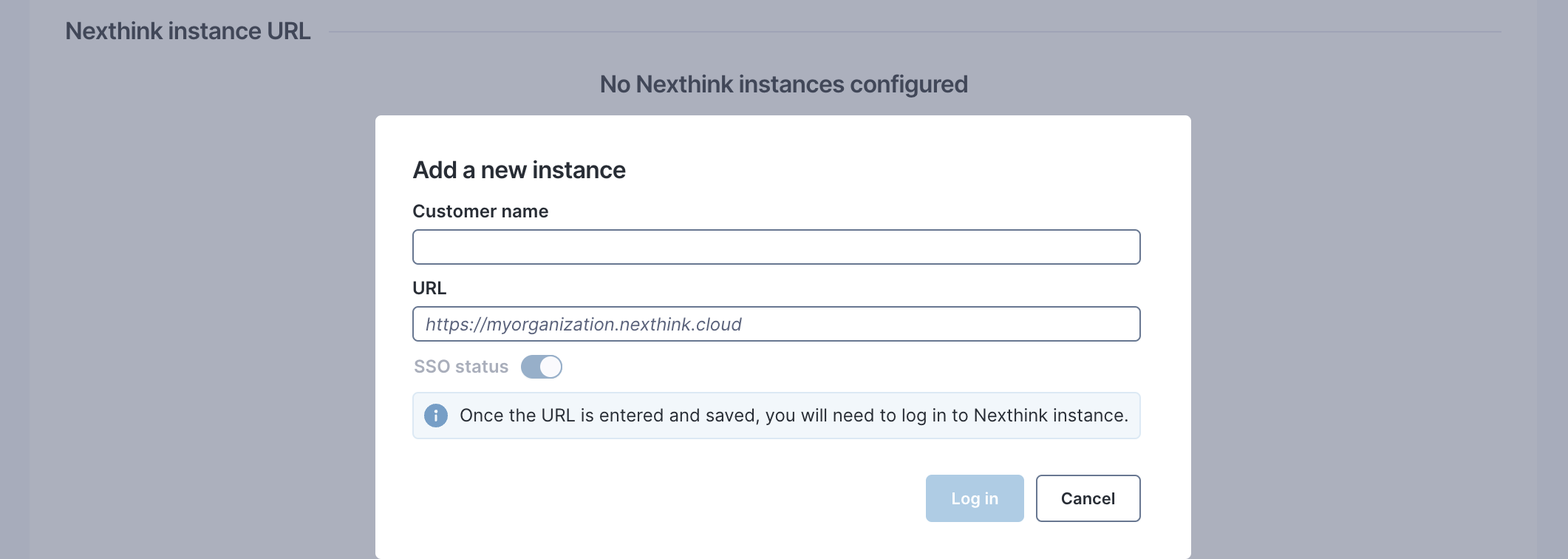
4. Click **New instance** and fill in the fields from the pop-up:
* **Name** that is used to identify the customer. The customer name is unique.
* **URL** of the Nexthink instance of the customer. The instance URLs are unique.
* **Log in** to the instance.
5. Once the authentication is successful, the Amplify extension adds the instance to the configuration.
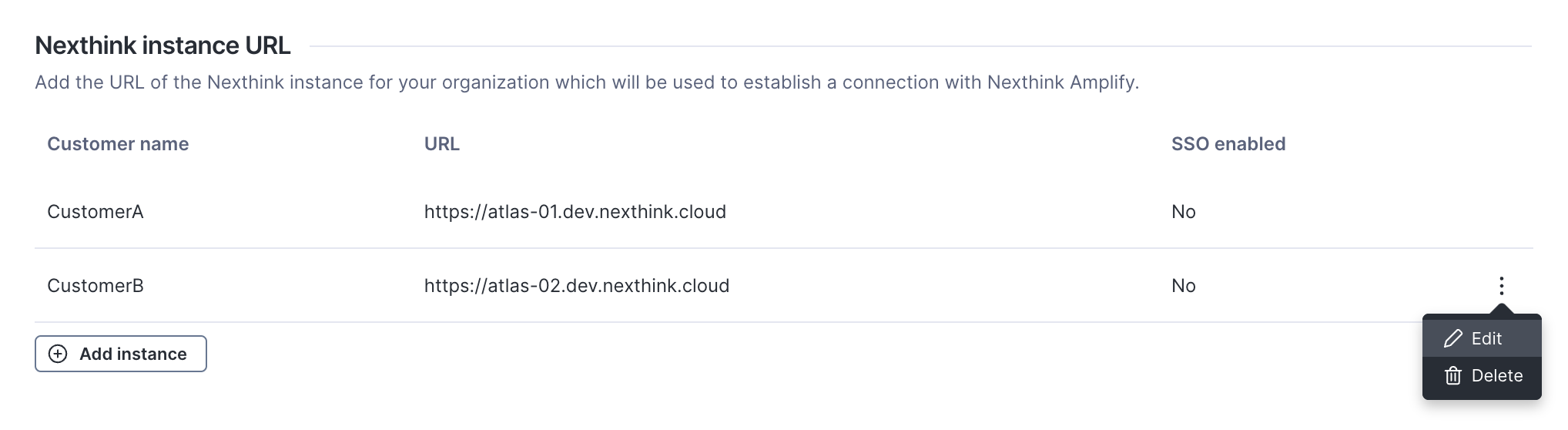
6. Click **Save** and add another instance by clicking on the **Add instance** button.
* **Edit** or **Delete** instances, by opening the action menu from the relevant instance.
{% hint style="info" %}
You require a valid account with Amplify permissions on each Nexthink instance to configure.
{% endhint %}
***
RELATED CONTENT:
* [Integrating Amplify with web applications](/configuring_nexthink/bringing-data-into-your-nexthink-instance/deploying-nexthink-in-non-vdi-environment/configure-amplify/installation-and-configuration/integrating-amplify-with-web-applications.md)
* [Configuring Amplify in the Nexthink web interface](/configuring_nexthink/bringing-data-into-your-nexthink-instance/deploying-nexthink-in-non-vdi-environment/configure-amplify/configuring-amplify-in-the-nexthink-web-interface.md)
* [Deploying Amplify to multiple devices](/configuring_nexthink/bringing-data-into-your-nexthink-instance/deploying-nexthink-in-non-vdi-environment/configure-amplify/extension-deployment.md)
---
# Agent Instructions
This documentation is published with GitBook. GitBook is the documentation platform designed so that both humans and AI agents can read, navigate, and reason over technical content effectively. Learn more at gitbook.com.
## Querying This Documentation
If you need additional information that is not directly available in this page, you can query the documentation by asking a question.
Perform an HTTP GET request on the following URL with the `ask` and `goal` query parameters:
```
GET https://docs.nexthink.com/configuring_nexthink/bringing-data-into-your-nexthink-instance/deploying-nexthink-in-non-vdi-environment/configure-amplify/installation-and-configuration.md?ask=&goal=
```
`ask` is the immediate question: it should be specific, self-contained, and written in natural language.
`goal` is what the user is ultimately trying to achieve, the reason they need the answer. Sharing it helps GitBook give you a better, more relevant answer. A goal is most helpful when it describes the outcome the user wants rather than restating the question. For example, with `ask=how do I create an API token`, a goal like `automate deployments from our CI pipeline` lets GitBook tailor the answer to that use case.
The response will contain a direct answer to the question and relevant excerpts and sources from the documentation.
Use this mechanism when the answer is not explicitly present in the current page, you need clarification or additional context, or you want to retrieve related documentation sections.